
Created in partnership with
Introduction
One of the most commonly chosen pathways for buildings that need to take action to meet this BEPS, the Performance Pathway requires buildings to reduce their energy use (measured by Adjusted Site EUI) by 20% compared to an average of 2018 and 2019 data (for simplicity, this series looks at 2019 data). The Performance Pathway lets buildings compare their current energy performance against their historical energy performance and gives building owners flexibility in how to meet requirements.
This year’s analysis is based on Adjusted Site EUI which will be the metric used by DOEE to evaluate compliance at the end of the cycle. Notably, this analysis uses a different metric than last year’s Hub piece that tracked partial progress toward meeting Performance Pathway requirements based on a weather-normalized site EUI metric . This means that this year’s analysis paints a slightly different compliance picture for certain building typologies, namely offices. Based on the project team’s understanding, the primary reason for this is due to the change in evaluation metric from weather-normalized Site EUI (in 2025’s series) to Adjusted Site EUI (in 2026’s series). As a result, the two datasets cannot be compared directly.
This piece will discuss progress on the Performance Pathway for the three largest groups of buildings on the Performance Pathway: offices, multifamily buildings, and hotels.
Office
This pie chart represents the percentage of improvement experienced by office buildings on the Performance Pathway as measured by Adjusted Site EUI. A majority of office buildings have made at least some improvement, with 55% having improved their Adjusted Site EUI by at least 10% and 29.6% of office buildings fall into the “Improved by 20% of more” category which means they are on track to be in compliance with BEPS. However, nearly a third of office buildings have seen no improvement since 2019 as evaluated by their 2024 data. Buildings that have already seen improvement even if they have not hit the 20% mark, and especially if they fall into the 15-20% range, should continue to pursue operational improvements and projects that can be completed by the end of 2026 in order to meet pathway requirements. Maintaining operational improvements will help keep buildings that have made progress on track for compliance.
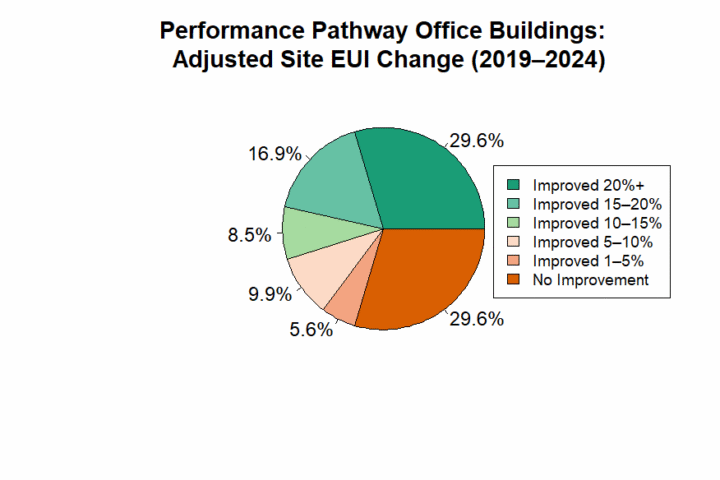
Figure 1: Percentage of Adjusted Site EUI reduction for office buildings on the Performance Pathway, based on 2024 data obtained on April 2, 2026.
Multifamily
This pie chart represents the percentage of improvement experienced by multifamily buildings on the Performance Pathway as measured by Adjusted Site EUI. This shows that just over half (about 53%) of buildings have shown significant improvement over 10% reduction in site EUI, with 23.1% of multifamily buildings already demonstrating improvement by over 20%. Similar to office buildings, multifamily buildings that have already seen improvement even if they have not hit the 20% mark, and especially if they fall into the 15-20% range, should continue to pursue operational improvements and projects that can be completed by the end of 2026 in order to meet pathway requirements. Maintaining operational improvements will help keep buildings that have made progress on track for compliance.
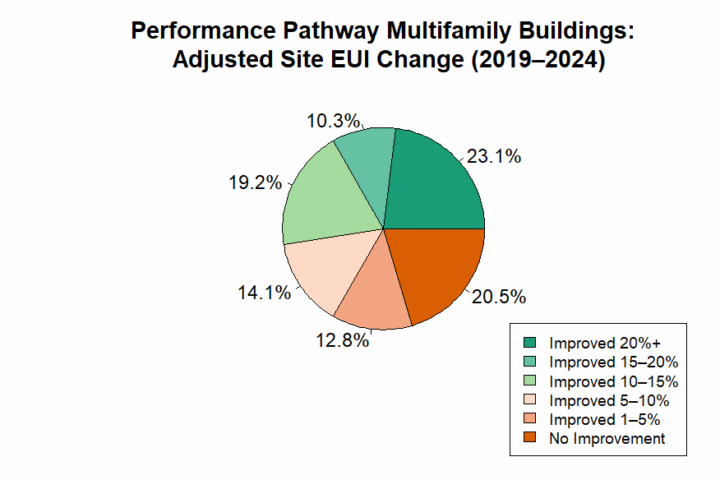
Figure 2: Percentage of Adjusted Site EUI reduction for multifamily buildings on the Performance Pathway, based on 2024 data obtained on April 2, 2026.
Hotels
This pie chart represents the percentage of improvement experienced by hotel buildings on the Performance Pathway as measured by Adjusted Site EUI. Hotels on the Performance Pathway can be generally divided into two categories: those that have improved their Adjusted Site EUI by at least 15% (about two-thirds of hotels, with 41.2% of hotels seeing improvements over 20%) and those that have either minimal or no improvement in Adjusted Site EUI. Buildings that have already seen improvement even if they have not hit the 20% mark, and especially if they fall into the 15-20% range, should continue to pursue operational improvements and projects that can be completed by the end of 2026 in order to meet pathway requirements. Maintaining operational improvements will help keep buildings that have made progress on track for compliance.
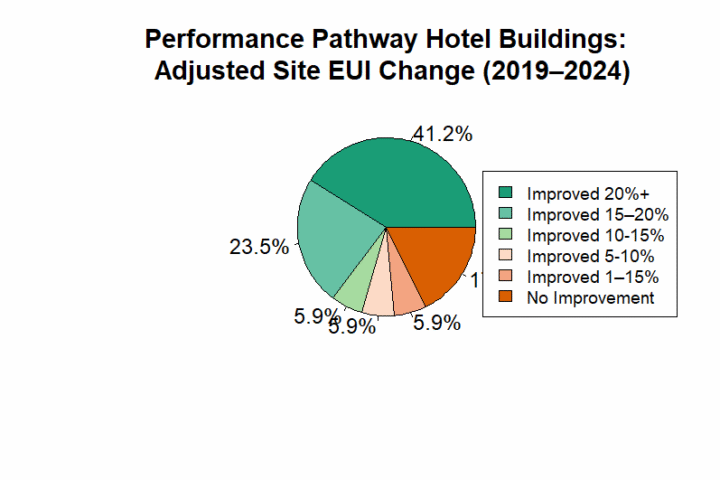
Figure 3: Percentage of Adjusted Site EUI reduction for hotels on the Performance Pathway, based on 2024 data obtained on April 2, 2026.
Conclusions
As seen above, the majority of multifamily buildings, offices, and hotels on the Performance Pathway are making progress towards BEPS compliance, with many already meeting the 20% reduction requirement and therefore on track for compliance based on their 2024 data. Some buildings still need to take action, however. Looking ahead, it is likely that the BEPS for Cycle 2 will be set at a higher ENERGY STAR score than Cycle 1.
This creates different sets of calls to action, depending on how much progress a building has made on the Performance Pathway in Cycle 1:
- For buildings that are on track to meet their Performance Pathway requirements: the immediate next step is maintaining that improvement as DOEE will evaluate compliance based on performance in 2026. To prepare for BEPS Cycle 2, take a look at our analysis of ENERGY STAR medians and corresponding calls to action to understand where the BEPS threshold might be set, how your building compares, and next steps to take.
- For buildings that have exceeded the 20% Adjusted Site EUI reduction on the Performance Pathway: To prepare for BEPS Cycle 2, there are a couple of possible mechanics that provide credit for work conducted in BEPS Cycle 1 either in the current or proposed BEPS Guidebook that might be applicable in future BEPS Cycles.
- In the current Guidebook, The Accelerated Savings Recognition pathway is available for buildings that save at least 36% Site EUI in BEPS Cycle 1. Buildings have gone exceptionally above and beyond their Performance Pathway requirements but would still need to take action in upcoming BEPS cycles can take advantage of this pathway starting in BEPS Cycle 2.
- In the proposed Guidebook: a compliance mechanic in the proposed version of the Guidebook would add another Accelerated Savings Recognition pathway in BEPS Cycle 2 for buildings that save at least 20% Adjusted Site EUI called ASR Level 0. The specifics of this pathway have not been fully defined yet, but the concept would be to offer credit in Cycle 2 for additional improvements above and beyond Performance Pathway requirements realized in Cycle 1 (in other words, saving more than 20% site EUI), thus creating a compliance-based incentive to continue doing work in BEPS Cycle 1.
- For buildings that have only made partial progress on the Performance Pathway: continue implementing project and operational improvements to reduce energy usage. The DC Sustainable Energy Utility (DCSEU) provides incentives, technical assistance, and energy efficiency support programs, including programs for low-income qualified properties, commercial business rebates, pay for performance, and custom incentives. Another option is to take a look at your ENERGY STAR score and compare it to the BEPS standard for your building type. If you are comfortably above the standard, consider switching to the Standard Target Pathway ahead of the December 31, 2026 deadline. Technical compliance in this BEPS cycle may also be possible via one of two compliance relief options to be issued later this year: Alternative Compliance Agreements and Good Faith Efforts, as described in the District Relief Options section of the introduction. The same guidance in the first bullet point applies, too—checking progress against ENERGY STAR medians should give you a good idea of if your property might need to take action in BEPS Cycle 2, including conducting an energy audit or retro-commissioning and incorporate energy efficiency measures into your capital planning over the next few years.
Please note: this is an independent analysis and we will not know what the actual BEPS Cycle 2 standards are until they are set by DOEE in 2028.