

Created in partnership with
Introduction
About half of buildings needing to take action to meet BEPS Cycle 1 have chosen the Standard Target Pathway which requires meeting the BEPS via the property’s DC BEPS Score. The DC BEPS Score is effectively the same as an ENERGY STAR score but is set at a point in time of the ENERGY STAR model (January 1, 2021) so as to avoid inadvertently penalizing buildings for updates in ENERGY STAR models following that date. The DC BEPS score mechanic is described in the proposed version of the Guidebook. For most buildings the difference between the DC BEPS Score and their ENERGY STAR score is minimal.
Similar to the Performance Pathway post using the actual evaluation metric of BEPS, this year’s analysis of buildings on the Standard Target Pathway uses the DC BEPS Score metric to track progress. This is a change from last year’s Hub piece which analyzed progress on the Standard Target Pathway using ENERGY STAR score.
Overall progress
The graph below represents progress by multifamily buildings (140 buildings), offices (99 buildings), and hotels (16 buildings) on the Standard Target Pathway. As shown, the percentage of buildings meeting the DC BEPS threshold across all typologies has increased since 2019, even though year-over-year improvement rates have not been linear. While we would expect the starting point for all building typologies to start at 0% since by definition buildings needing to take action should not have met pathway requirements in 2019, we note that multifamily buildings and offices both have buildings with ENERGY STAR scores above the standard in 2019. While the specific reasons for this were not analyzed for this piece, some third-party verification changes in attributes such as gross floor area may contribute to this 2019 phenomenon.
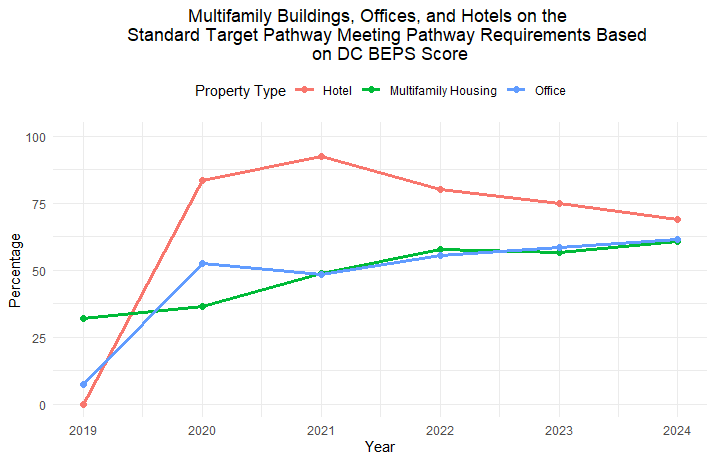
Figure 1: Buildings meeting Standard Target Pathway Requirements, based on 2024 data obtained on April 2, 2026.
The proportion of multifamily buildings meeting Standard Target Pathway requirements has generally increased since 2019, experiencing a mostly linear increase to reach a 61% percentage of multifamily buildings meeting the BEPS threshold in 2024. Office buildings generally followed a linear path with a bump in 2020 (possibly due to COVID-19 impacting occupancy), followed by a dip before resuming an upward trend to reach 62% of buildings already meeting the BEPS threshold in 2024.
Hotels were most impacted by COVID-19, with 83% of hotels meeting Standard Target Pathway requirements in 2020! This increased further in 2021 before beginning a slow decline to 69% of buildings meeting the BEPS threshold in 2024.
Partial Progress
Analysis was done on buildings that are still below the standard in order to evaluate their distance from the thresholds, which can give insight into whether they might meet pathway requirements in 2026, the evaluation year. The graphs below only represent multifamily and office buildings, as only a handful of hotels are not on track to meet the Standard Target Pathway requirements in this dataset.
Multifamily
The chart below represents the remaining distance from meeting Standard Target Pathway requirements for multifamily buildings. The chart below divides buildings into five categories based on distance from BEPS (which is roughly correlated to DC BEPS score, using Appendix D of the BEPS Guidebook as a guide to determine distance to BEPS). A plurality of buildings (40.9%) are within 5% of the BEPS, with another 20.5% of buildings 5-10% from BEPS. This means that just over 60% of multifamily buildings on the Standard Target Pathway are within 10% of meeting the BEPS threshold. Conversely, just under 10% of multifamily buildings are over 20% from the BEPS. Properties more than 20% from BEPS that have made some energy improvements which have resulted in a reduction in Energy Use Intensity (EUI) might be well served looking at changing pathways to the Performance Pathway via the use of a Pathway Change Application to reduce Alternative Compliance Payment exposure.

Figure 2: Multifamily buildings making partial progress on the Standard Target Pathway, based on 2024 data obtained on April 2, 2026.
In general, multifamily buildings that have seen improvement and are close to meeting BEPS may be able to meet the BEPS by pursuing operational improvements and projects that can be completed by the end of 2026 in order to meet pathway requirements. Maintaining operational improvements will help keep buildings that have made progress on track for compliance.
Office
The chart below functions similarly to the multifamily chart in the previous section. About a third of offices (30.4%) are within 5% of the BEPS, with another 34.8% of buildings 5-10% from the BEPS. This means that just over 65% of office buildings on the Standard Target Pathway are within 10% of meeting the BEPS threshold. Conversely, just over 20% of office buildings are more than 20% from the BEPS. Properties more than 20% from BEPS that have made some energy improvements which have resulted in a reduction in Energy Use Intensity (EUI) might be well served looking at changing pathways to the Performance Pathway via the use of a Pathway Change Application to reduce Alternative Compliance Payment exposure.
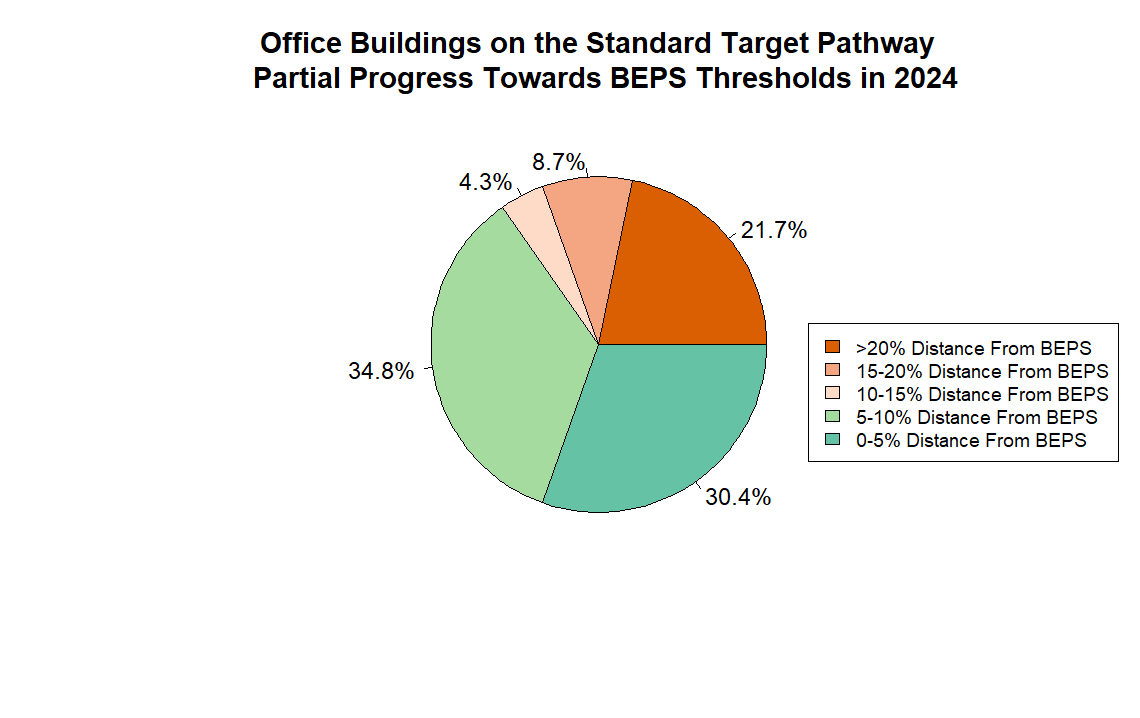
Figure 3: Office buildings making partial progress on the Standard Target Pathway, based on 2024 data obtained on April 2, 2026.
In general, office buildings that have seen improvement and are close to meeting BEPS may be able to meet the BEPS by pursuing operational improvements and projects that can be completed by the end of 2026 in order to meet pathway requirements. Maintaining operational improvements will help keep buildings that have made progress on track for compliance.
Conclusions
As seen above, while most buildings have scores that are above the BEPS threshold indicating they are on track to meet their Standard Target Pathway requirements (including multifamily buildings crossing the 50% threshold as of 2024!), other buildings are still in the process of meeting Standard Target Pathway requirements as of 2024. Based on our review of ENERGY STAR median scores, it is likely that the BEPS for Cycle 2 will be set at a higher ENERGY STAR score than Cycle 1.
Buildings that are above the BEPS threshold on the Standard Target Pathway in 2024: Maintain your improvements to ensure you continue to meet the standard this year, which is the evaluation year (2026). Looking ahead, if buildings chose the Standard Target Pathway in part because of a smaller lift needed in Cycle 1 to meet the BEPS, and if they’ve met the BEPS by DC BEPS Score, it would be prudent to review how the property is rated against ENERGY STAR medians. If your property is below the 2024 ENERGY STAR median, it might make sense to look at implementing measures in 2026 and 2027 in an effort to either reduce the required lift in BEPS Cycle 2 or meet BEPS Cycle 2 outright.
Buildings that have made partial progress on the Standard Target Pathway in 2024: As the District is evaluating compliance based on 2026 data, continue to make improvements, and in particular optimization of existing building systems or retro-commissioning which can sometimes be done relatively quickly, with improvements able to be realized in 2026. The DC Sustainable Energy Utility (DCSEU) provides incentives and rebates including business rebates and tailored assistance programs. There are compliance relief options under consideration in Cycle 1 which may be relevant, too: Alternative Compliance Agreements and Good Faith Efforts, as described in the District Relief Options section of the overview. The same guidance in the previous bullet point applies, too—checking progress against ENERGY STAR medians should give you a good idea of if your property might need to take action in BEPS Cycle 2.